
PBinJect Medical Spa’s Dermal Fillers at a Glance
- Treatment approach: Lead Injector Paige Balley, BSN, RN, evaluates your facial expressions, proportions, existing volume, and natural structure before recommending filler placement. Product is placed conservatively to restore gentle support and balance while preserving your expressions and recognizable features.
- Treatment areas: Dermal fillers can address early cheek volume loss, under-eye hollows, fine lines around the mouth, uneven or thinning lips, mild facial asymmetry, and areas that may benefit from added definition of the chin or jawline. Filler can also be placed in surrounding areas, such as the cheeks or jawline, to support the tissues that contribute to prominent smile lines.
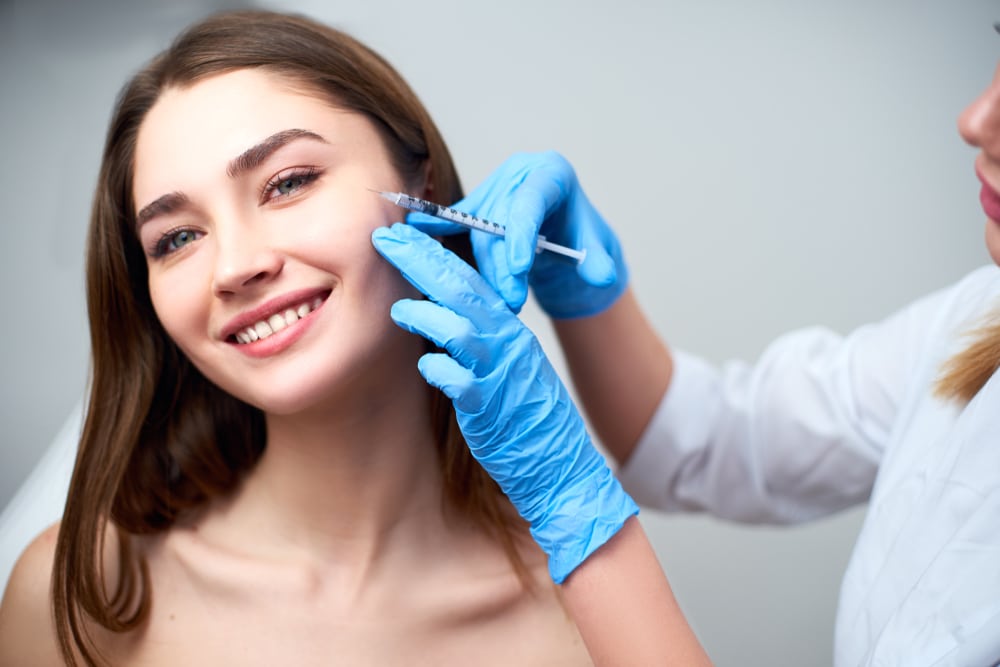
- Treatment experience: Your visit begins with a detailed discussion of your concerns and desired results. A numbing agent may be applied for comfort, and the injections themselves typically take only a few minutes. Most patients feel light pressure rather than significant discomfort and can review their initial results immediately after treatment.
- Recovery: Most patients return to their usual activities right away. Mild redness, swelling, or small bruises might occur but generally resolve quickly. Patients are usually advised to avoid strenuous exercise, alcohol, excessive heat, and pressure on the treated area for the first 24 hours.
- Results: Some improvement may be visible immediately, with the filler continuing to settle over the following one to two weeks. Depending on the treatment area and product selected, results often last approximately 6–12 months and gradually fade over time.
- Treatment flexibility: Many hyaluronic acid fillers can be adjusted or dissolved with hyaluronidase when needed. Dermal fillers may also be combined with treatments such as Dysport®, PRF, or acne scar treatments as part of a broader facial rejuvenation plan.
What Are Dermal Fillers?
- Early volume loss in the cheeks
- Fine lines around the mouth
- Under-eye hollowing
- Uneven or thinning lips
- Mild asymmetry
- Soft contouring of the jawline or chin
Benefits of Dermal Fillers
- Quick treatment times
- Minimal downtime
- Immediate improvement
- A natural look when placed conservatively
- Adjustable options if needed
- Gradual fading over time, allowing for fine-tuning
Who Is a Good Candidate?
- Prefer a minimal, clean aesthetic
- Want gentle volume without dramatic change
- Have mild to moderate volume loss
- Want to maintain youthful structure
- Are comfortable with temporary results
What to Expect During Treatment
Recovery and Results

Why Choose PBinJect Medical Spa for Dermal Fillers in Wakefield, MA?
FAQs
How Soon Before a Special Event Should I Get Dermal Fillers?
It’s generally recommended to plan dermal filler treatments at least two weeks before an important event. Mild swelling, redness, or small bruises can occur after injections. These effects typically fade within a few days, but allowing extra time gives the filler a chance to settle fully and look its most natural. Scheduling your appointment in advance also leaves room for small adjustments if desired. If the treatment area is the lips or under-eyes, which can swell slightly more, a two-to-three-week window is often ideal.
Can Dermal Fillers Help Reduce the Appearance of Smile Lines?
Yes, dermal fillers are commonly used to soften nasolabial folds (NLFs)–the lines that run from the sides of the nose to the corners of the mouth. These lines often deepen with age. A common misconception is that treatment is focused solely on injecting directly into the NLFs. For best results, hyaluronic acid fillers are actually injected into the surrounding tissues such as the cheeks and jawline. By replacing volume and supporting surrounding tissues, we can reduce the appearance of deep smile lines.
Are Dermal Fillers Reversible if I Don’t Like the Results?
Hyaluronic acid fillers can be dissolved if you want to make adjustments. A medication called hyaluronidase can break down the filler, allowing the treated area to return closer to its original appearance. This option offers reassurance for patients who want flexibility with their results.
Dissolving filler is usually quick and performed in the office. In some cases, small refinements can be made rather than fully reversing the treatment. Working with a skilled injector, like those at PBinJect Medical Spa, and discussing your goals in detail helps reduce the likelihood that reversal will be necessary.
Will Dermal Fillers Make My Face Look Puffy or Overfilled?
When dermal fillers are placed conservatively and with attention to facial balance, they are designed to provide subtle support rather than an exaggerated look.
A puffy or overfilled appearance typically occurs when too much product is used or when injections are not carefully planned. Skilled injectors study facial proportions, muscle movement, and existing volume before placing filler. This approach allows them to add gentle structure while preserving natural expression.
Can I Wear Makeup After Receiving Dermal Fillers?
Most providers recommend waiting about 24 hours before applying makeup to treated areas. Immediately after injections, the skin may have small puncture marks that are still healing. Applying makeup too soon can increase the chance of irritation or introduce bacteria into the injection sites.
After the first day, you can usually return to your regular cosmetic routine. Your injector will provide specific guidance based on the treatment area and your skin’s response.
What Should I Avoid After Dermal Filler Injections?
After receiving dermal fillers, it’s helpful to avoid a few activities for the first 24 hours to support proper healing.
- Strenuous exercise, alcohol, and exposure to excessive heat—such as saunas or hot tubs—may increase swelling or bruising.
- Patients are also encouraged not to massage or press on the treated areas unless instructed otherwise by their provider.
- Lying flat may make swelling more noticeable. Sleeping with your head slightly elevated the first night can help prevent this.
Most people can return to normal daily routines right away, but following these simple precautions ensures the filler settles smoothly and comfortably.